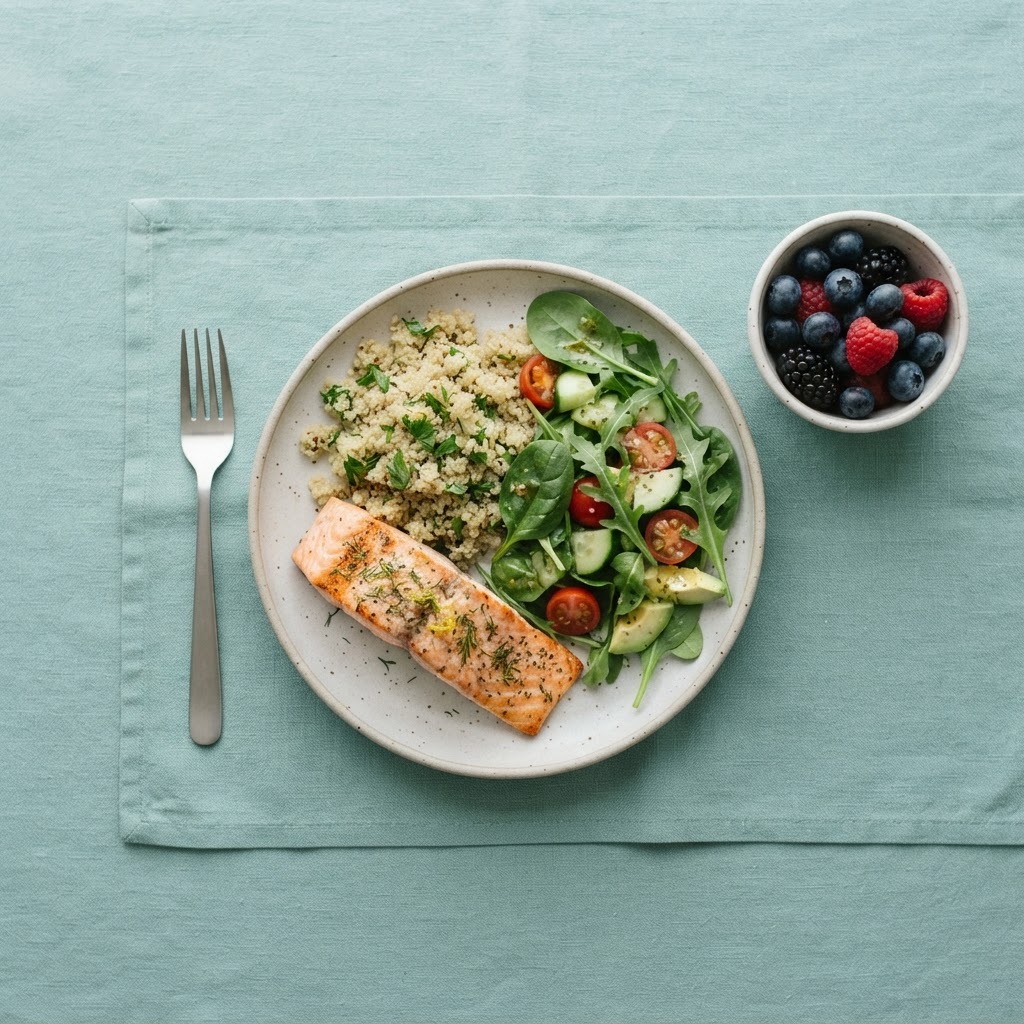
How to Eat on a GLP-1: A Practical Nutrition Guide
A practical guide to eating well while taking GLP-1 medications — what to eat, how to handle appetite loss, the role of protein and carbs, and how to protect your hair and muscle.
How to Eat on a GLP-1: A Practical Nutrition Guide
Starting a GLP-1 medication (like semaglutide or tirzepatide) changes your relationship with food — sometimes dramatically. Appetite drops, portions shrink, and foods you once loved may suddenly seem unappealing. While this is exactly what makes these medications effective for weight loss, it also creates a new challenge: eating enough of the right things to stay healthy, preserve muscle, and avoid side effects like hair loss.
This guide answers the most common nutrition questions people face on a GLP-1 journey.
What Types of Foods Should I Eat?
Think of your reduced appetite as a calorie "budget." Because you're eating less overall, every bite needs to work harder. Prioritize nutrient-dense foods — those packed with vitamins, minerals, and protein relative to their calorie content.
Build your meals around these pillars:
| Food Group | Examples | Why It Matters |
|---|---|---|
| Lean protein | Chicken, turkey, fish, eggs, Greek yogurt, tofu, beans | Preserves muscle mass; keeps you full longer |
| Fiber-rich vegetables | Leafy greens, broccoli, carrots, peppers, zucchini | Supports digestion; prevents constipation |
| Complex carbohydrates | Oats, quinoa, brown rice, sweet potatoes, whole-grain bread | Steady energy; additional fiber |
| Healthy fats | Avocado, olive oil, nuts, seeds, salmon | Supports hormone health; helps absorb vitamins |
| Hydration | Water, herbal tea, electrolyte drinks (if needed) | GLP-1s increase dehydration risk |
A simple plate method: fill half with vegetables, a quarter with lean protein, and a quarter with complex carbs. Add a thumb-sized portion of healthy fat.
If I'm Not Hungry, Should I Still Eat?
Yes — but strategically.
One of the biggest mistakes people make on a GLP-1 is eating too little. When your appetite is suppressed, it's easy to skip meals entirely, which can lead to:
- Muscle loss (your body breaks down muscle for energy)
- Nutrient deficiencies
- Fatigue and dizziness
- Hair thinning (more on this below)
- Gallstones (a known risk of rapid weight loss)
You don't need to force large meals. Instead, aim for small, frequent portions of nutrient-dense food throughout the day. Think of it as fueling your body rather than feeding an appetite.
Practical tips:
- Eat 3–4 small meals or 5–6 mini-meals per day
- If a full meal feels impossible, have a protein shake, Greek yogurt, or a handful of nuts
- Set reminders if you genuinely forget to eat
- Track your protein intake — aim for 0.8–1 gram of protein per pound of your target body weight (roughly 80–120g/day for most adults)
Can I Eat Carbs or Should I Avoid Them Altogether?
You can — and should — eat carbohydrates. Completely cutting carbs is unnecessary and can backfire.
Carbohydrates are your body's preferred energy source. The issue isn't carbs themselves — it's the type of carbs. Highly processed carbs (white bread, sugary snacks, pastries) spike blood sugar and provide little nutritional value. Complex carbs (whole grains, starchy vegetables, legumes) deliver steady energy, fiber, and important B vitamins.
Focus on quality over elimination:
| Choose These | Limit These |
|---|---|
| Oats, quinoa, brown rice | Sugary cereals |
| Sweet potatoes, squash | White bread, pastries |
| Beans, lentils, chickpeas | Soda, sweet tea |
| Whole-grain bread/pasta | Candy, baked sweets |
| Fruit (berries, apples, bananas) | Fruit juice (high sugar, no fiber) |
A good rule: if a carb comes in a package with a long ingredient list, reach for the whole-food version instead. Pair carbs with protein or fat to slow digestion and prevent blood sugar spikes.
Why Is Protein Important?
Protein is the single most important macronutrient to prioritize on a GLP-1. Here's why:
-
Preserves muscle mass. When you lose weight rapidly, your body loses both fat and muscle. Adequate protein — combined with resistance training — signals your body to hold onto muscle while burning fat.
-
Keeps you full. Protein is the most satiating macronutrient. Even with a suppressed appetite, protein-rich meals help you feel satisfied longer.
-
Supports hair, skin, and nails. Hair is made primarily of a protein called keratin. If your protein intake drops too low, your body prioritizes vital functions over hair growth — leading to thinning.
-
Stabilizes blood sugar. Protein slows the absorption of glucose, preventing energy crashes.
Easy protein sources:
- Breakfast: Greek yogurt (15–20g), eggs (6g each), protein shake (20–30g)
- Lunch/Dinner: 4 oz chicken breast (35g), salmon (22g), tofu (20g), lentils (18g/cup)
- Snacks: String cheese (7g), cottage cheese (12g), jerky (10g), edamame (17g/cup)
If you struggle to hit your protein target through food alone, a daily protein supplement (whey, casein, or plant-based) is an easy, effective way to close the gap.
If I Don't Eat Right, Will My Hair Fall Out?
It can — but it's usually temporary and preventable.
Hair thinning is one of the most commonly reported side effects of rapid weight loss, and it's not caused by the GLP-1 medication itself. It's caused by the nutritional deficit that often comes with eating dramatically less.
Here's what's happening: when your body isn't getting enough calories, protein, iron, zinc, or other key nutrients, it shifts resources away from "non-essential" functions — like hair growth — to keep your vital organs running. This condition, called telogen effluvium, causes hair to enter a shedding phase 2–3 months after the trigger.
How to protect your hair on a GLP-1:
| Nutrient | Why | Food Sources |
|---|---|---|
| Protein | Hair is made of keratin | Meat, fish, eggs, dairy, beans |
| Iron | Carries oxygen to hair follicles | Red meat, spinach, lentils, fortified cereals |
| Zinc | Supports hair tissue growth | Oysters, beef, pumpkin seeds, chickpeas |
| Biotin (B7) | Supports keratin production | Eggs, salmon, avocados, nuts |
| Vitamins A & C | Support sebum production and collagen | Sweet potatoes, carrots, citrus, bell peppers |
Practical steps:
- Don't crash-diet. Aim for a moderate calorie deficit (300–500 calories below maintenance), not starvation.
- Hit your protein target daily. This is the #1 protective factor.
- Take a daily multivitamin to cover gaps in your reduced diet.
- Talk to your doctor about additional supplements (iron, biotin, zinc) if you notice thinning.
- Be patient. If shedding occurs, it typically resolves within 3–6 months once nutrition is corrected.
Quick Reference: Daily Nutrition Checklist
Use this simple checklist to make sure you're fueling your body well on a GLP-1:
- Protein at every meal (aim for 20–30g per meal)
- Vegetables at least twice a day
- Complex carbs — not eliminated, just chosen wisely
- At least 64 oz of water (GLP-1s increase dehydration risk)
- Small, regular meals — don't skip even if you're not hungry
- A daily multivitamin
- Some form of movement or resistance training (to preserve muscle)
Key Takeaways
- *Eat less, but eat better. Every bite counts when your appetite is reduced.
- Protein is non-negotiable. It protects your muscle, your hair, and your satiety.
- Carbs aren't the enemy. Choose whole, complex sources and pair them with protein.
- Not feeling hungry doesn't mean you shouldn't eat. Fuel your body with small, nutrient-dense meals throughout the day.
- Hair loss is usually preventable through adequate protein, calories, and key micronutrients.
This guide is for educational purposes only and does not constitute medical advice. Always consult your prescribing provider or a registered dietitian before making significant changes to your diet, especially while taking a GLP-1 medication.
Medical Disclaimer
This content is for educational purposes only and is not medical advice. GLP-1 Primer does not recommend or endorse any specific medication, provider, or treatment. Always consult a licensed healthcare professional before making decisions about your health.

